Guide · Roles
Emcee or moderator: which do you need?
An emcee runs the whole event. A moderator runs one discussion: a panel, a debate or a question and answer session. If your programme has panels, you need a moderator for them, and the emcee can often be that person.
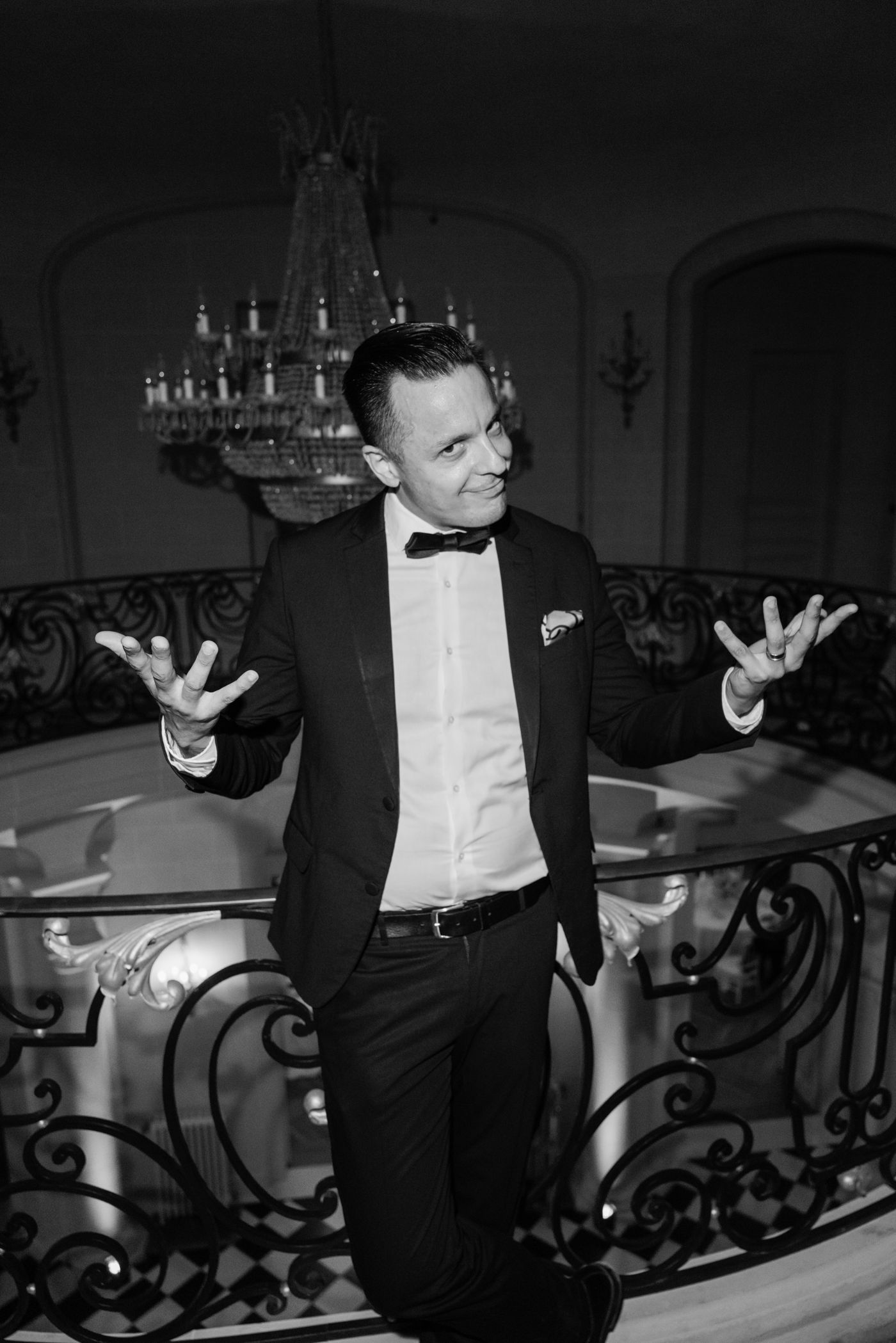
By Naïm Terrache, event host · Updated
The emcee
The emcee opens and closes, introduces the speakers, links the sessions, keeps the time and handles the unexpected. The emcee is responsible for the flow of the whole day.
The moderator
The moderator prepares questions from the brief, introduces the panellists, follows up on their answers, stops the one who talks too long, brings in the quiet one, takes questions from the audience and ends on time.
The follow-up is the hard part. A moderator who only reads prepared questions gets prepared answers.
Panel chair and facilitator
Panel chair is the usual British term for a panel moderator. A facilitator runs sessions where the audience takes part, such as workshops. Facilitation is a different skill from hosting a stage.
When one person can do both
If your panels are on general business topics, one person can host the event and moderate the panels. You brief one person, and the audience follows one voice through the day.
Book a specialist moderator when the subject is technical enough that good follow-up questions need real expertise. The emcee then introduces the moderator and hands over.
How I work
I host events and moderate panels in English, French and Spanish. For a panel, I send you my questions before the event, so you can correct them.
Questions
- Should our CEO moderate the panel?
- Only if they are comfortable interrupting a colleague or a client on stage. Many are not, and the panel runs long.
- Who takes the audience questions?
- The moderator, during the panel they run. The emcee handles questions in plenary sessions without a panel.
- What should the moderator receive before the event?
- The topic, the names, titles and backgrounds of the panellists, the messages you want covered, and anything that must not come up.
- How many questions should a moderator prepare?
- More than the time allows. Good follow-ups take time, so many prepared questions are never asked, and that is normal.
Availability
Get a quote for your event.
Send the date, the city, the format and the languages of your audience. You get availability and a quote back, usually within the day.