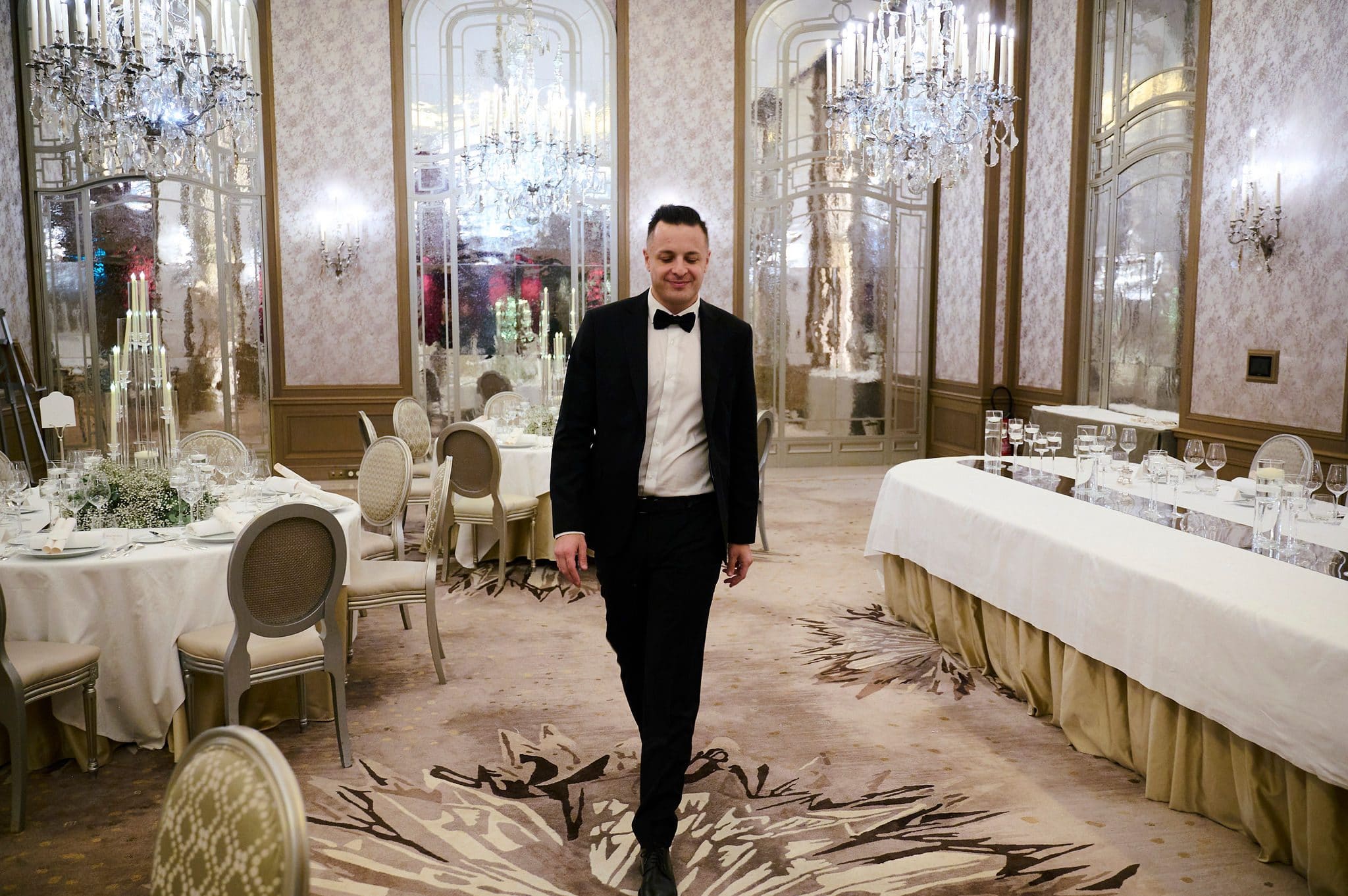
 Photo : @picchio_wedding
Guides
Guides to booking an event host.
What a host does, what affects the quote, and what to ask before you book.
What does an event host do?
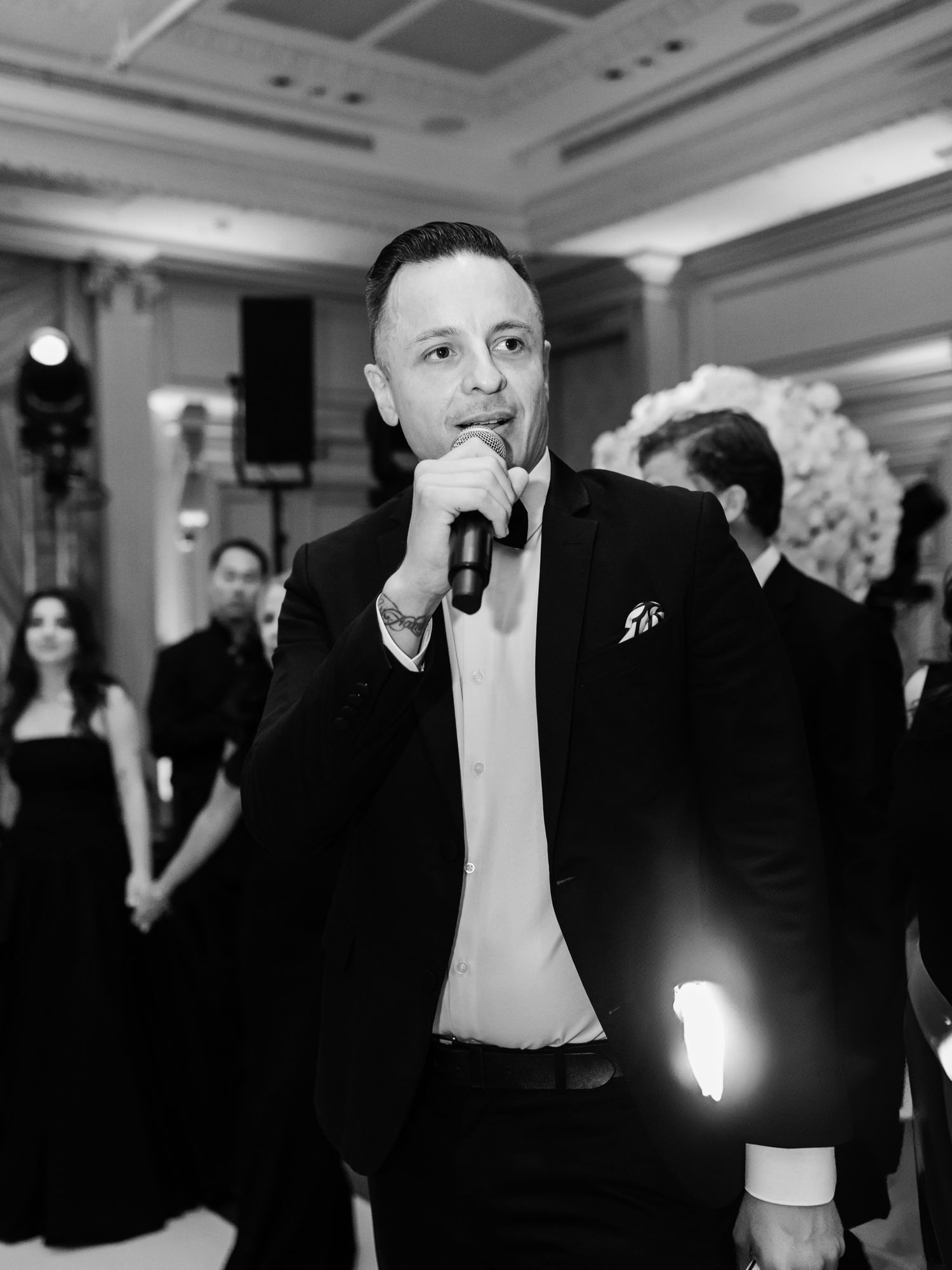
An event host runs your programme from the stage. They open the event, introduce each speaker, link the sessions, keep the timing and close. Most of the work happens before the day, in the running order.
What decides the cost of a corporate emcee
There is no standard price for an emcee. The cost depends on the days on site, the format, the preparation, the languages and the travel. This page explains each factor, so you know what to send to get an accurate quote.
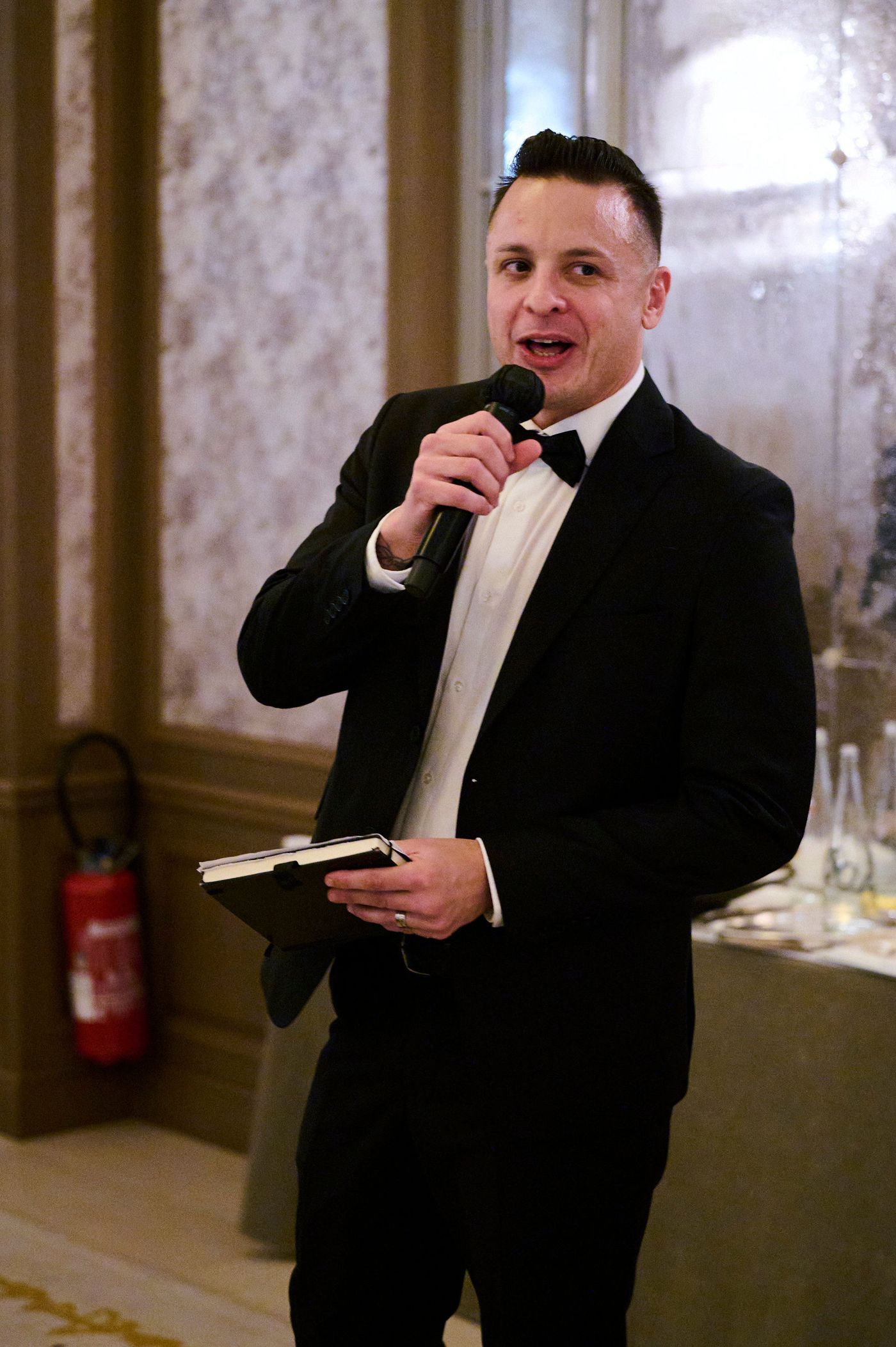 Photo : @selim_mahieu
How to find and book an event host
Ask your production agency and your venue first, then watch each host on video. Ask as soon as your date is set, because a host can only work one event per date. Send a short, complete brief, and watch for the red flags below.
 Photo : @picchio_wedding
Emcee or moderator: which do you need?
An emcee runs the whole event. A moderator runs one discussion: a panel, a debate or a question and answer session. If your programme has panels, you need a moderator for them, and the emcee can often be that person.

Questions to ask an emcee before you book
First, decide if you need one. If you do, ask who will be on stage, who writes the running order, which languages they can improvise in, and how they work on the day. The answers tell you more than a showreel.
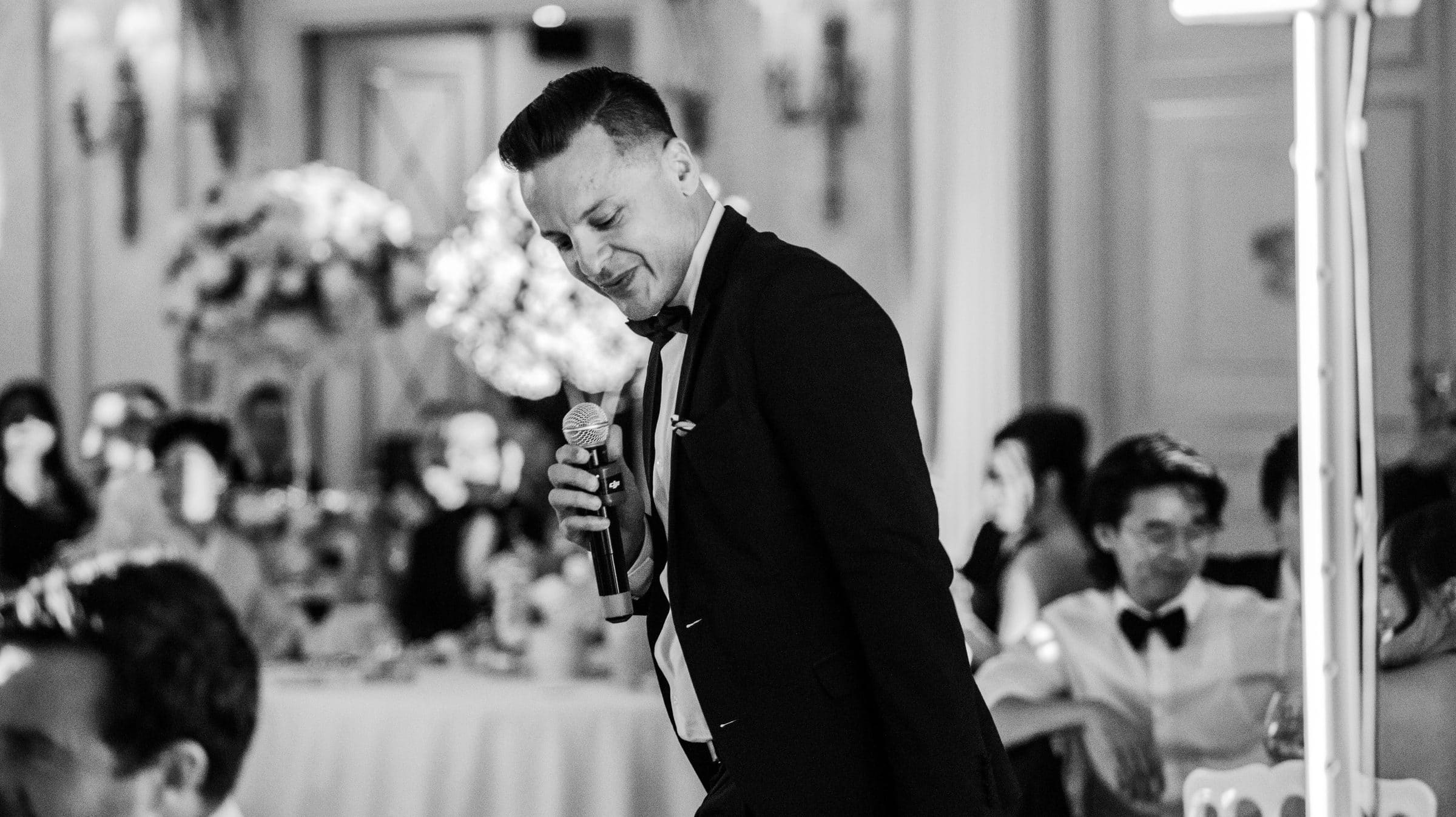
How to write a run of show for your emcee
A run of show is a table with one line per moment of the event: time, duration, who is on stage, what is said and the technical cue. The emcee script is the exact words for each line. Build the table first.
 Photo : @selim_mahieu
Finding an English-speaking event host in France
Look for a host who can improvise in English on stage and who speaks French with the venue and the crew. For a mixed audience, a host who works live in two or three languages saves you interpreters for the host's part of the programme.
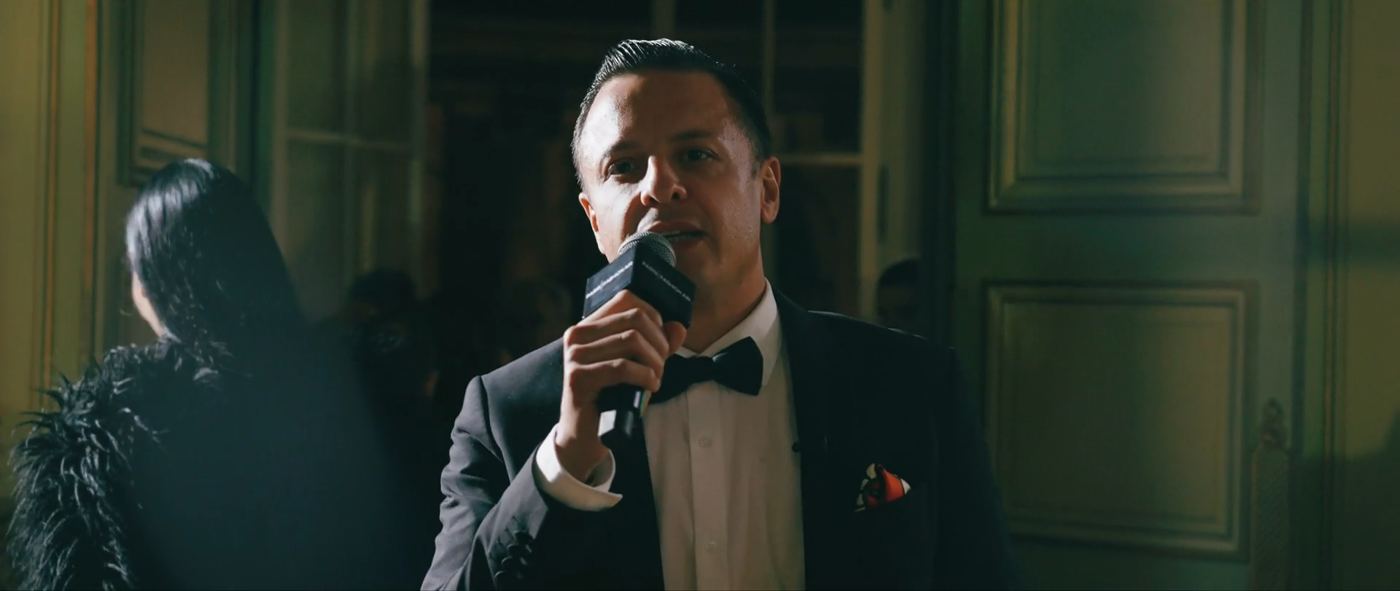 Photo : @selim_mahieu
Bilingual emcee or interpreter: which one does your event need?
An interpreter translates what someone else says, which means every sentence happens twice and your run of show grows by roughly half. A bilingual emcee speaks both languages as the event moves, so nothing is repeated. They solve different problems, and most events only need one of them.
Bringing a gala to France: what actually changes
The format travels. The timing does not. A French dinner runs longer than its equivalent in London or New York, the speeches sit in different places, and the technical crew works to its own conventions. None of it is difficult, but a run of show written in another country and not adjusted will drift by the time dessert arrives.
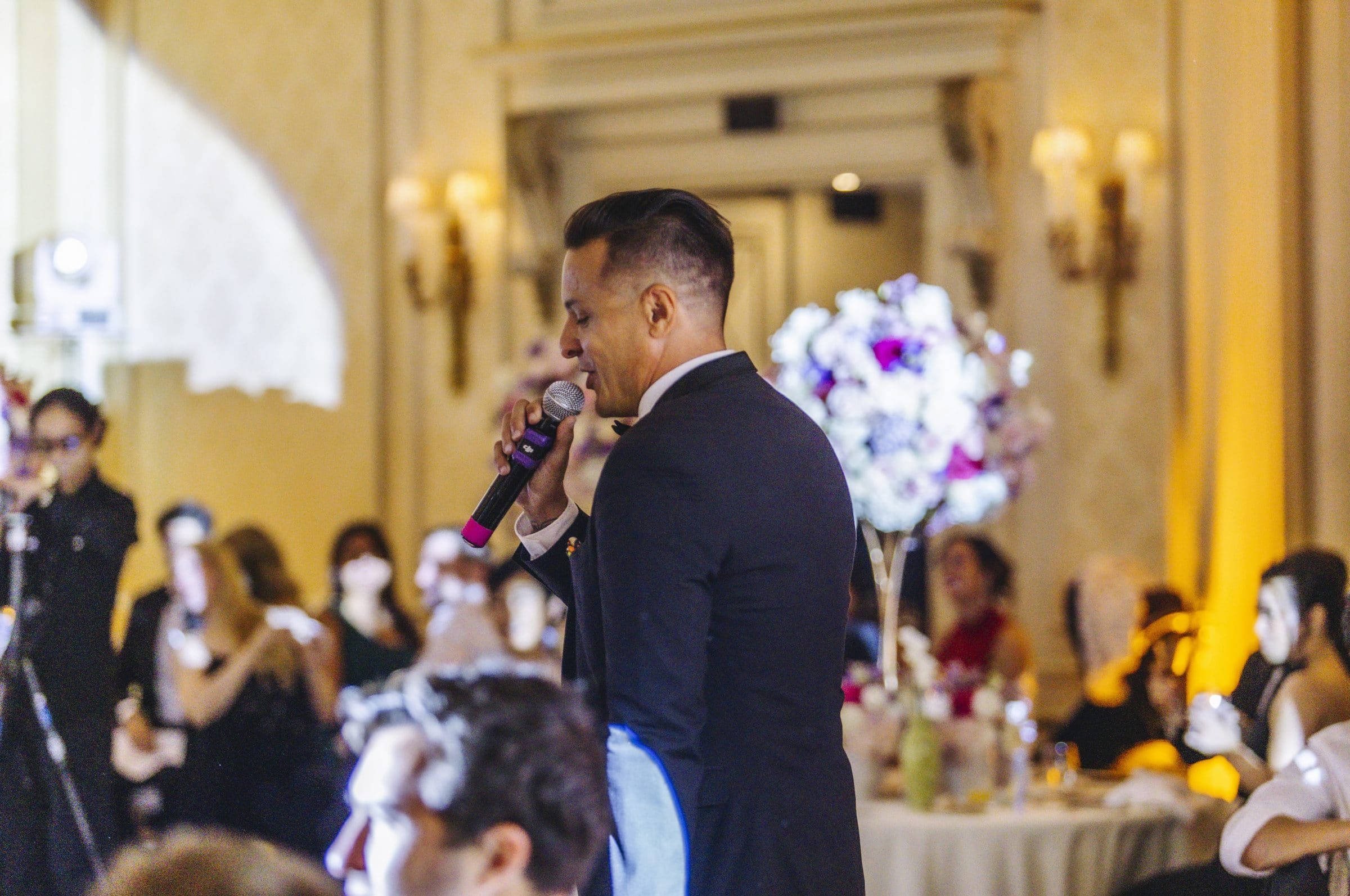
How to run a corporate conference and time the agenda
Decide the one message you want people to leave with, then build the day around it. Put the strategic content in the morning, write every transition into the agenda, and agree with each speaker how they will be brought to a close. Do this six to eight weeks ahead and the day runs itself.
How to script and time an awards evening
An awards evening is the same sequence repeated: category, nominees, winner, applause, walk to the stage, photo, thank you. Repeated twelve times in a row it tires the room. Split it into short blocks between courses, set the walk-ups in advance and write the host script around the dinner service.
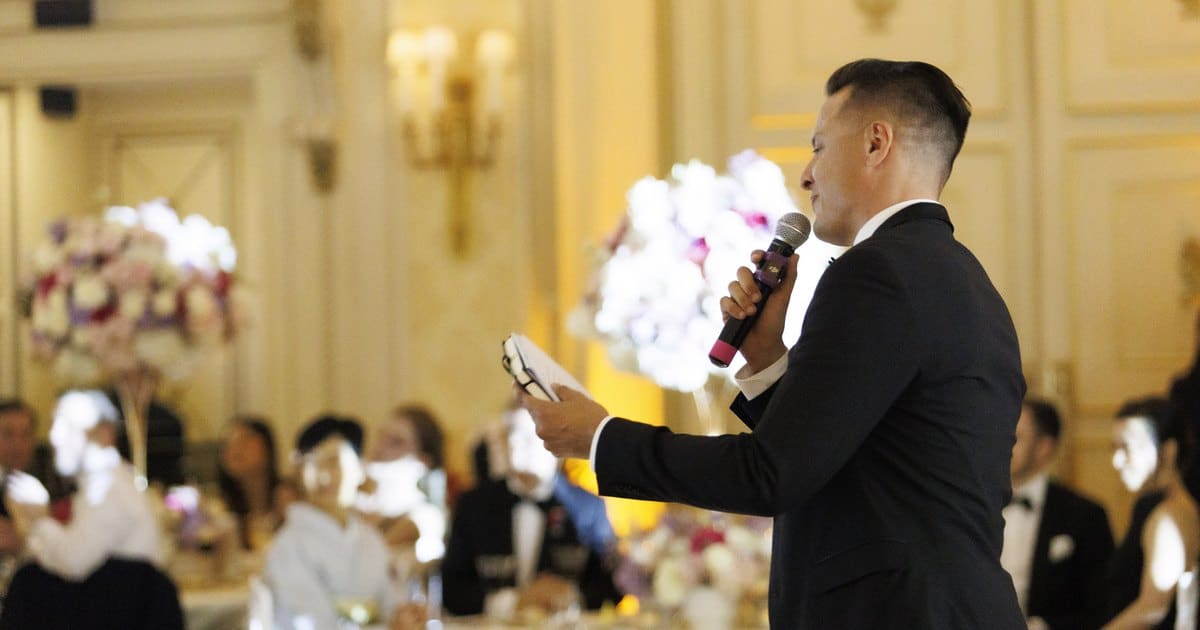
When a speaker overruns: what the host does
The host does not cut the speaker off. The work happens before: an agreed end time, a signal the speaker has seen, and a segment already marked as shortenable further down the programme. On stage, the host recovers the minutes without the room noticing.
 Photo : @selim_mahieu
What a host does at a product launch
At a launch, the host builds the room towards one moment, the reveal, and protects it. A conference has many sessions of equal weight. A launch has one climax, and everything before it exists to make it land.
How to introduce a keynote speaker
Keep it to about 30 seconds, and answer four questions: what the talk is about, why it matters to this audience, why this person is the right one to give it, and who they are. Build the last line towards the name.
 Photo : @selim_mahieu
How to run an audience Q&A at a conference
Give the Q&A its own slot in the running order, collect questions before the room speaks, and decide who picks them. A Q&A goes wrong when nobody owns it: it runs long because there is always one more hand, or it dies because nobody dares to go first.
What is a compere? Compere, emcee, MC and host compared
A compere is the British word for what Americans call an emcee or an MC: the person who hosts an event from the stage, introduces each part and keeps it moving. For a corporate event the word matters less than the scope you write in the brief.
How announcements between acts keep a live show continuous
Between the acts of a concert or showcase, someone has to say who is next, cover the set change, give the audience its practical instructions and keep to the production’s clock. This guide explains how those announcements work and what the production should write down before the day.
Hosting an event that is also filmed or streamed: what changes
When an event is also filmed or streamed, the host serves two audiences at once: the people in the room and the people watching. Nothing can be edited, so timing, language and cues all become tighter. This guide covers what changes and what to prepare.
How to judge an event host’s preparation before you book
A host’s quality shows in what happens before the day, not in how well they talk. Look for someone who asks for your running order, checks every name, joins the rehearsal and can show you recent work.
Colleague, professional or guest: who runs the programme?
For a short internal meeting, a confident colleague is enough. For a programme with several speakers, an international audience or a hard timetable, a professional host protects the event better. A known name draws attention but does not replace the person who keeps the time.
What a stage host does at a trade show or multi-stage event
A stage host is responsible for one stage and its timetable. They open it, introduce each session, keep the clock and hand over to the next. At a trade show or a festival with several stages, each stage needs its own host who treats that stage as the whole event.
 Photo : @selim_mahieu
Availability
Get a quote for your event.
Send the date, the city, the format and the languages of your audience. You get availability and a quote back, usually within the day.