Guide · Timing
When a speaker overruns: what the host does
The host does not cut the speaker off. The work happens before: an agreed end time, a signal the speaker has seen, and a segment already marked as shortenable further down the programme. On stage, the host recovers the minutes without the room noticing.
By Naïm Terrache, event host · Updated
Agree the end time before the speaker walks on
In the briefing, give each speaker a finishing time, not a duration. "You finish at 14:35" is clearer than "you have twenty minutes", because it still holds if the start was late.
Tell them how they will be warned: a card held at the foot of the stage, a countdown screen in view, or the host standing in the wings. A speaker who has seen the signal and agreed to it rarely ignores it.
What the host does when the time is up
First, the signal, given early enough that the speaker can land the point they are on.
If the speaker keeps going, the host steps in from the side while the speaker is still talking, and thanks them at the first natural pause. A host who walks on during a sentence looks like a rescue. A host who waits for a breath and takes the room back with a thank you looks like part of the plan.
For a guest with real standing in the room, or a founder speaking at their own company event, the decision to let them run over belongs to the producer, taken in advance. The host follows it.
Where the minutes come from
Before the event, mark two or three items that can be shortened without anyone seeing a gap: a video, a second round of thanks, a category announced faster, a transition cut to one sentence.
The host then recovers time in small pieces over the next segments instead of asking one person to give it all back. The room never hears that the programme is behind.
The one thing not to cut is the pause before a key moment. Squeezing it makes the room feel rushed.
Panels and Q&A overrun differently
A panel overruns because the conversation is good, and the answer is the moderator, not the host. Agree who watches the clock, and the sentence they will use to close.
A Q&A overruns because there is always one more hand. The host announces the last question in advance, takes it, and uses the closing line already written. If questions come from the floor, a runner with a microphone also controls how many people can speak.
When the day is already late
Decide with the producer, in the room and not on the stage, what is dropped. The host announces it as a change of order and never as a loss: "we will come back to this after the break" is true and carries no apology.
In a bilingual programme, the quickest saving is usually the repeated announcement: one language, one time, then straight on.
Questions
- Can a host cut a speaker off politely?
- Yes, if the signal was agreed in advance and the host waits for a natural pause. Thanking the speaker warmly while taking the microphone back keeps the room on their side.
- Who decides whether a senior speaker may run over?
- The producer or the client, before the event. The host applies the decision and does not make it live.
- What is the best warning signal for a speaker?
- One the speaker has actually seen in rehearsal: a countdown screen in their line of sight, or a card at the foot of the stage. A signal given for the first time on the day is the one that gets missed.
- How much time can a host realistically recover?
- A few minutes per segment, spread across the programme, if shortenable items were marked in advance. Beyond that the running order itself has to change.
Services this applies to
Other guides
- What does an event host do?
- What decides the cost of a corporate emcee
- How to find and book an event host
- Emcee or moderator: which do you need?
- Questions to ask an emcee before you book
- How to write a run of show for your emcee
- Finding an English-speaking event host in France
- Bilingual emcee or interpreter: which one does your event need?
- Bringing a gala to France: what actually changes
- How to run a corporate conference and time the agenda
- How to script and time an awards evening
- What a host does at a product launch
- How to introduce a keynote speaker
- How to run an audience Q&A at a conference
- What is a compere? Compere, emcee, MC and host compared
- How announcements between acts keep a live show continuous
- Hosting an event that is also filmed or streamed: what changes
- How to judge an event host’s preparation before you book
- Colleague, professional or guest: who runs the programme?
- What a stage host does at a trade show or multi-stage event
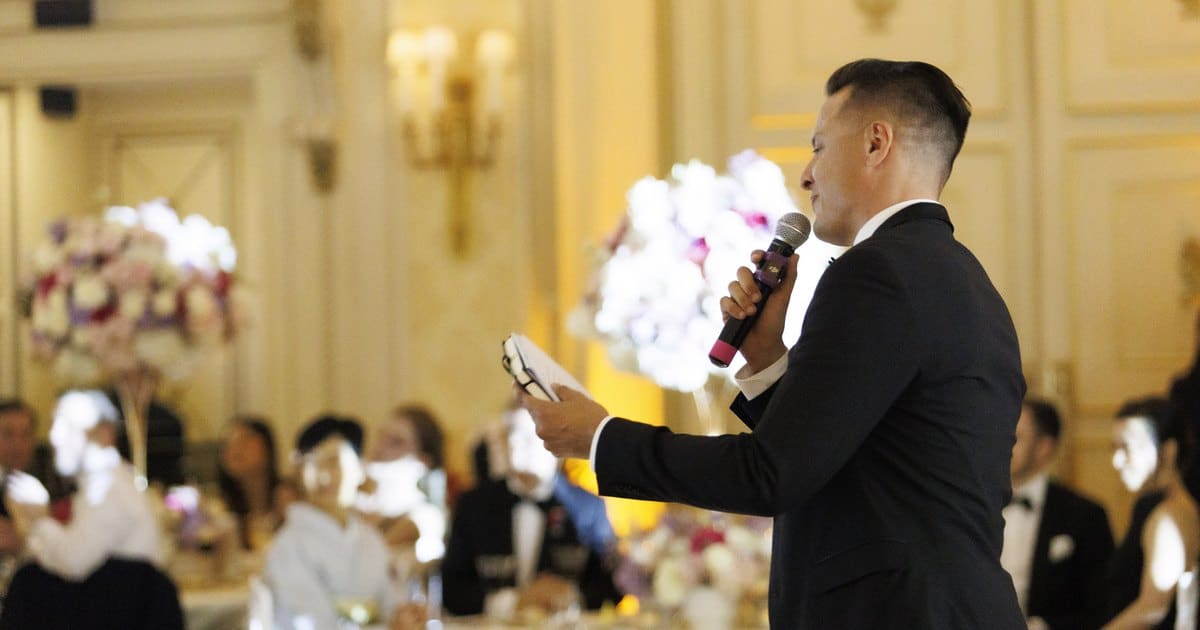
 Photo : @selim_mahieu
Availability
Get a quote for your event.
Send the date, the city, the format and the languages of your audience. You get availability and a quote back, usually within the day.